My 2025 Iran Experience
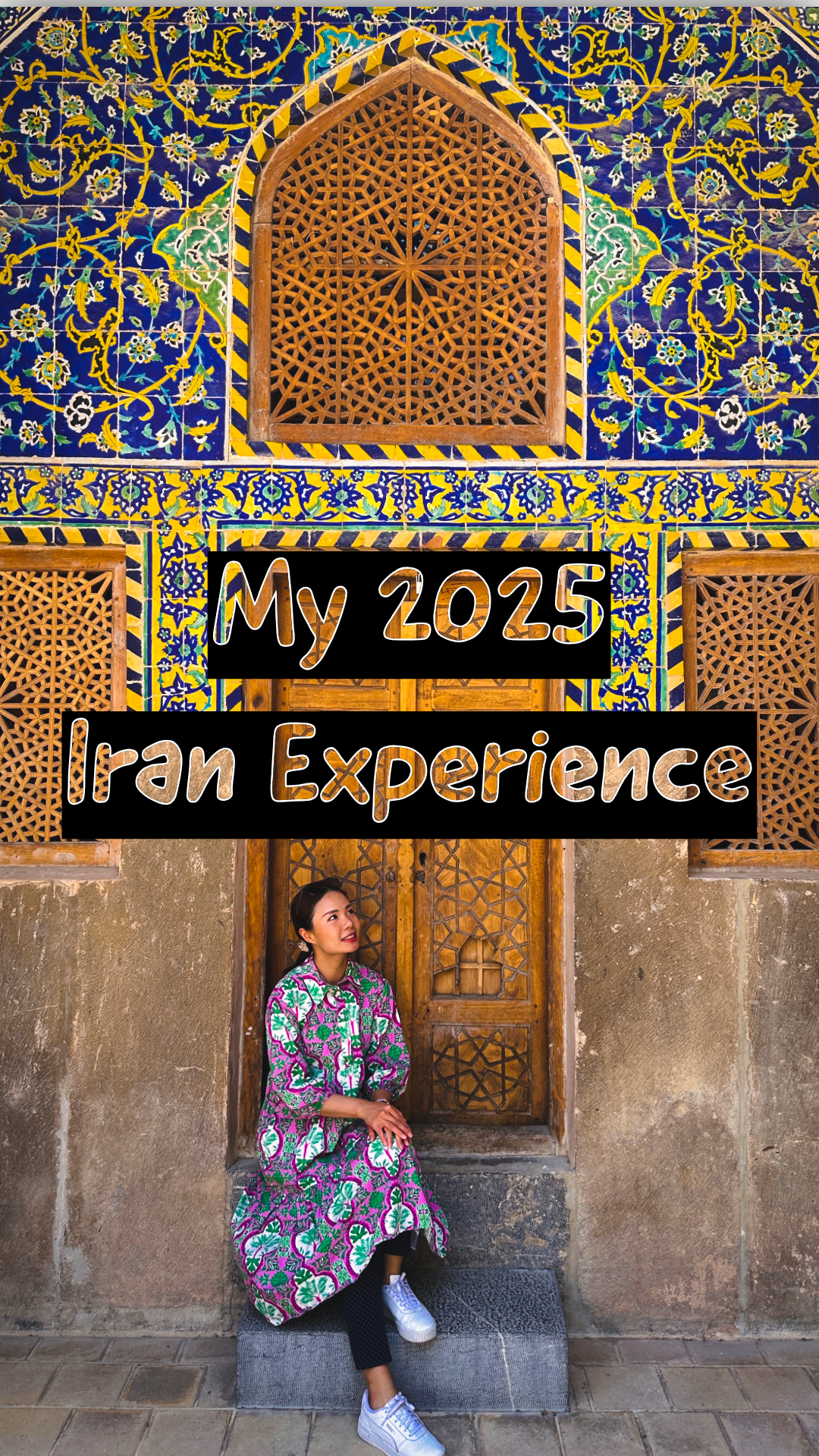
Iran was the first Islamic country that I ever visited, and just getting there felt like an adventure on its own. With the international sanctions in place, planning a personal trip remotely becomes quite challenging. Hotel reservations aren’t available through typical booking platforms like Booking.com or credit card travel portals. International roaming doesn’t work, and foreign credit cards don’t either. Most social media platforms such as Facebook, YouTube, and X are blocked. The only exception is Instagram, which Iranians can use freely without restrictions, and they are extremely active on it. For me, Instagram becomes my window into their everyday lives, and ultimately a lifeline for most of my travel arrangements.
My trip was set in mid-May 2025, just one month before Israel launched an attack on Iran on June 13, 2025. In recent years, as the conflict between Israel and Iran worsened, tourism in Iran has declined dramatically. In fact, the country’s tourism industry never truly recovered after the pandemic.
We found ourselves to be the only tourists in all our tour groups, with a local guide just for us. On the first day in Tehran, when we met our guide Feya, I was surprised to see her in a T-shirt and sandals, wearing only a straw hat, no headscarf. It turned out that hijab is no longer mandatory for women in Iran; a hat is enough to meet the requirement as I was told. I, on the other hand, was so worried about my scarf slipping off in public that I wore a wide-brimmed farmer’s hat over it just to keep it in place.
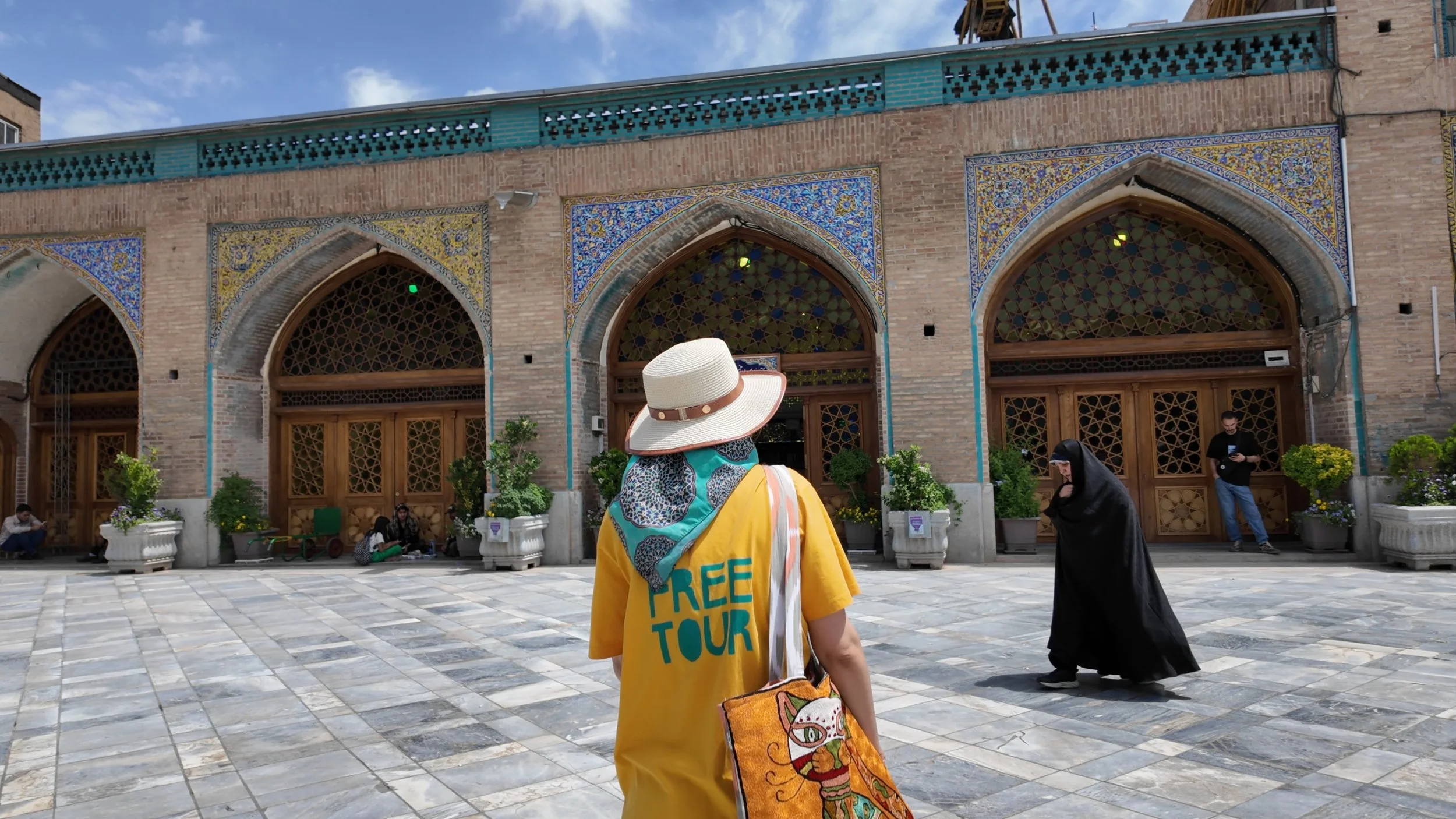
Feya, my tour guide, dressed in modern style while showing us around the Grand Bazaar in Tehran
The shift in women’s dress code became immediately noticeable when we arrived in Kashan, a more conservative city about three hours south of Tehran. Women were often seen wearing the full-length cloak known as the chador. Interestingly, Kashan is also one of the wealthiest cities in Iran, thanks to its long-standing traditions of rosewater production and carpet making, two of the city’s biggest economic drivers.
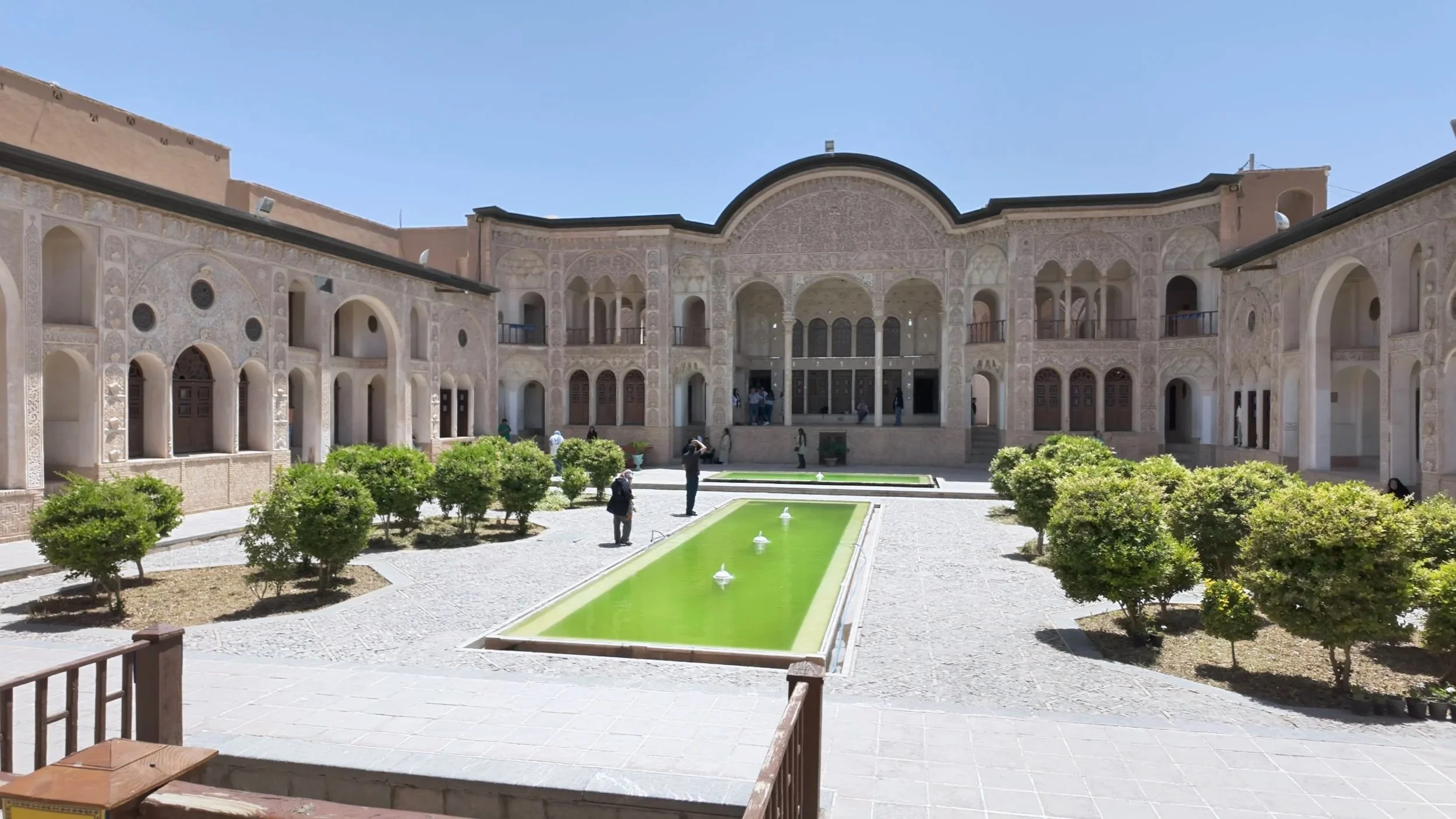
Tabatabaei House, one of the many beautiful historic merchant homes in Kashan
While in Kashan, I was fortunate to be hosted by a homestay family, which gave me a rare glimpse into the life of a young Iranian family. One evening, I was invited to join them for dinner at 11 p.m.! In the desert regions, where daylight stretches late into the evening, it’s common for families to dine much later than what I was used to. Another interesting thing I noticed was that squat toilets are still the standard in most Iranian households, even in newly built homes. Unless you’re staying in a hotel, the chances of finding a Western-style sitting toilet are quite rare.
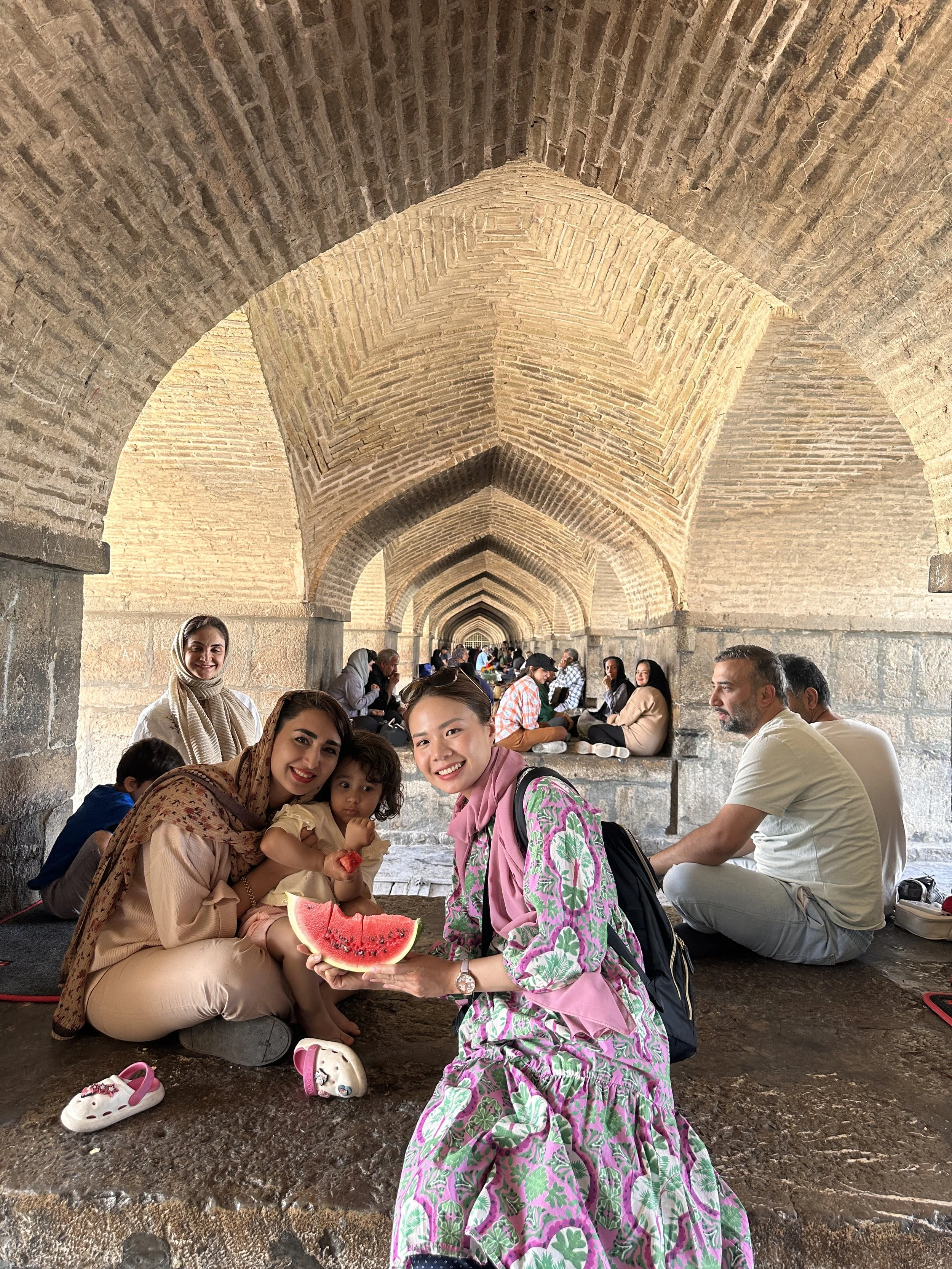
Walking beneath the iconic 33-arch Safavid bridge on a Sunday afternoon, a sweet local family kindly offered me watermelon
Iranians are generally very happy and welcoming toward foreign visitors. We were often greeted by strangers on the street with a cheerful “Welcome to Iran.” Families offered us fruit during their weekend gatherings, and we were even invited to play badminton in the park. I lost count of how many times I was asked to take photos with locals.
The question I was asked most often by Iranians was: “What do you think about Iran?” My impression of Iran is that it feels pretty safe, at least in most cities, It’s common to see women gathering together and children playing in the parks well past midnight.
Iranian people are warm and helpful, and young people, in particular, are eager to strike up conversations even with limited English. They are curious about the outside world, and they want to travel, explore, and see the world just like everyone else. However, international sanctions have placed many restrictions on Iranians, limiting their access to resources and making it much more difficult for them to connect with and travel to the rest of the world.