A Persian Tea Tasting Experience
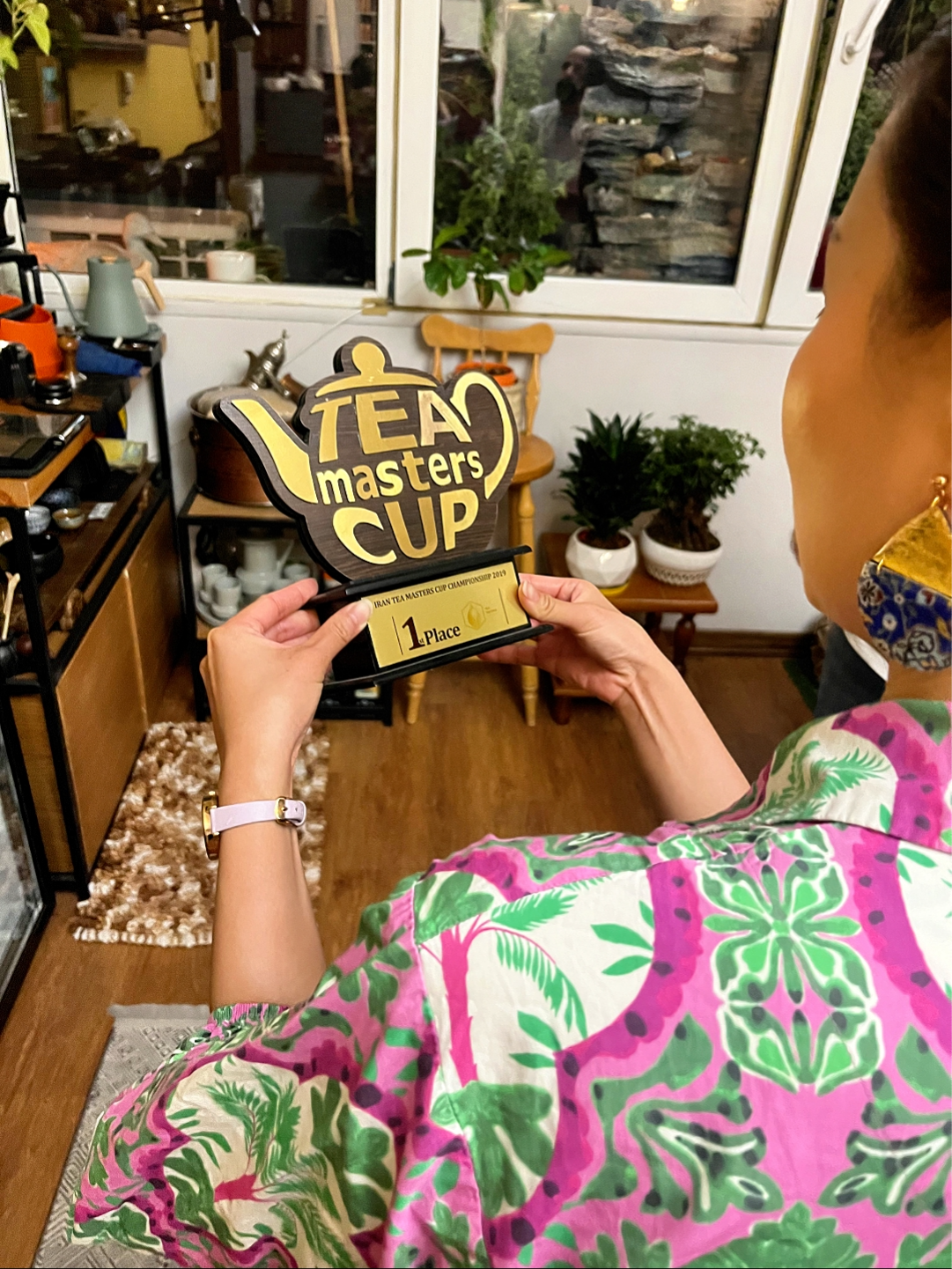
Aside from learning about Damask roses, one of the highlights of my trip was meeting award-winning tea master Saman, who invited us for a tea-tasting session. Not only did he cook and spoil us with Iranian delicacies, but he also shared his tea blends and demonstrated how to prepare tea the traditional Persian way.
Persian tea is typically served in a clear, hourglass-shaped glass called an estakan, allowing you to appreciate the color and strength of the brew. Unlike most teacups or mugs with handles, you hold the glass by its narrowest part, where it is the least hot, so you can enjoy your tea without burning your fingers.
According to Saman, there are three elements that define a perfect glass of Persian tea. The first is lab-reez. Lab means "lip" in Farsi, and lab-reez refers to filling the glass so full that it is nearly spilling over the rim.
The second is lab-sooz. Iranians prefer their tea piping hot, and lab-sooz means the tea is hot enough to burn your lips.
The third is lab-duz. Iranians also tend to steep their tea for a long time, allowing the color to deepen and the flavor to become stronger. Since it is black tea, the longer it sits in hot water, the more bitter it becomes. Lab-duz describes a tea so strong and bitter that it makes you instinctively press your lips together after taking a sip.
Of course, no glass of Persian tea is complete without sugar. Many Iranians enjoy their tea with nabat, crystallized rock sugar candy, which is either stirred into the tea or held between the teeth while sipping. The sweetness perfectly balances the bitterness of a strongly brewed black tea.
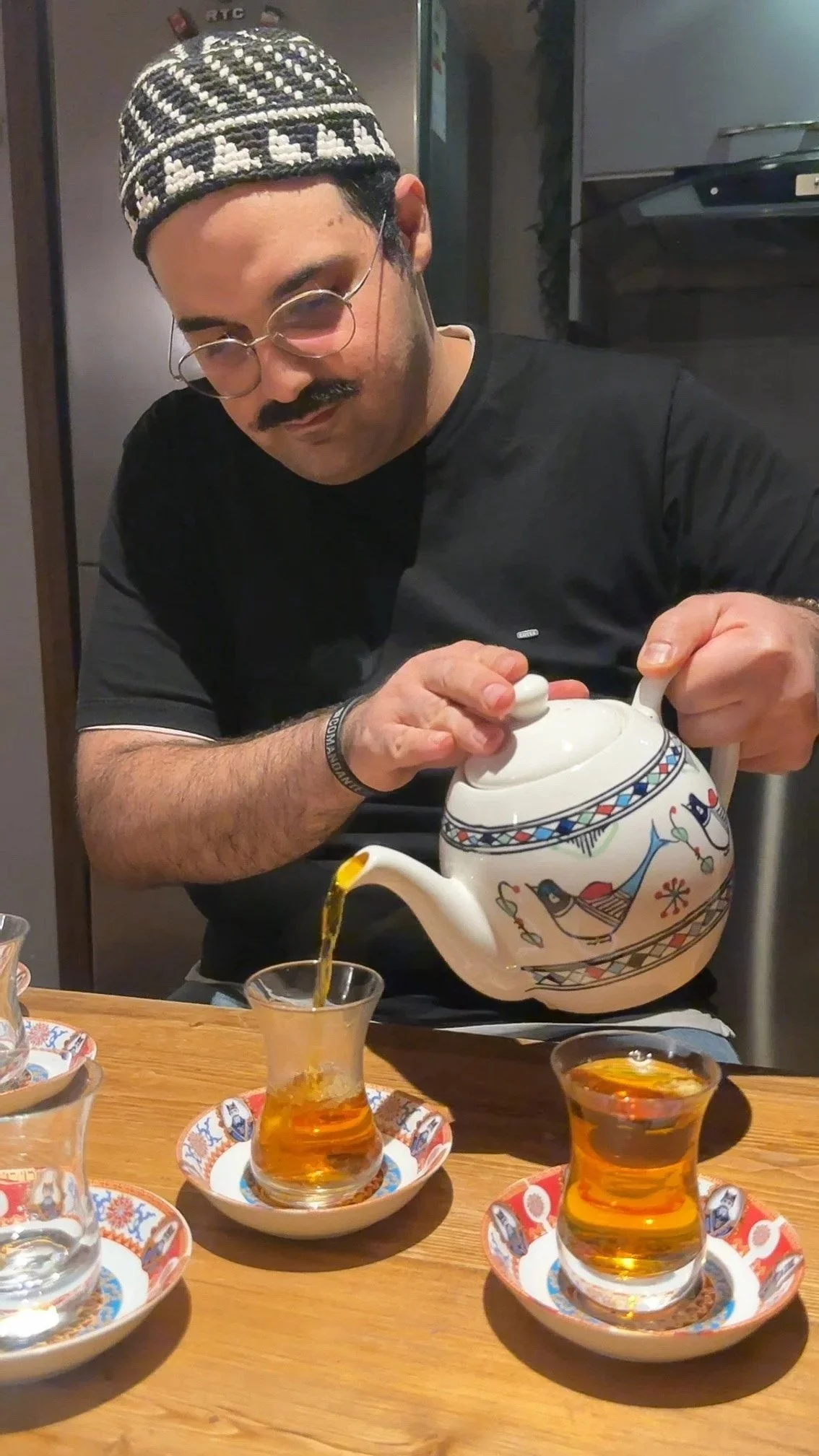
Saman demonstrating traditional Persian tea preparation with hourglass-shaped glass called an estakan
Dipping nabat, rock sugar candy into fresh Persian black tea